
Due diligence
AI-detected findings, tasks, and the buyer Q&A queue.
Due diligence is where VALORIO does the work a diligence analyst would otherwise spend weeks on by hand: scanning reports for anything worth flagging, turning that into trackable follow-up work, and drafting answers to buyer questions from the workspace's own documents and numbers.
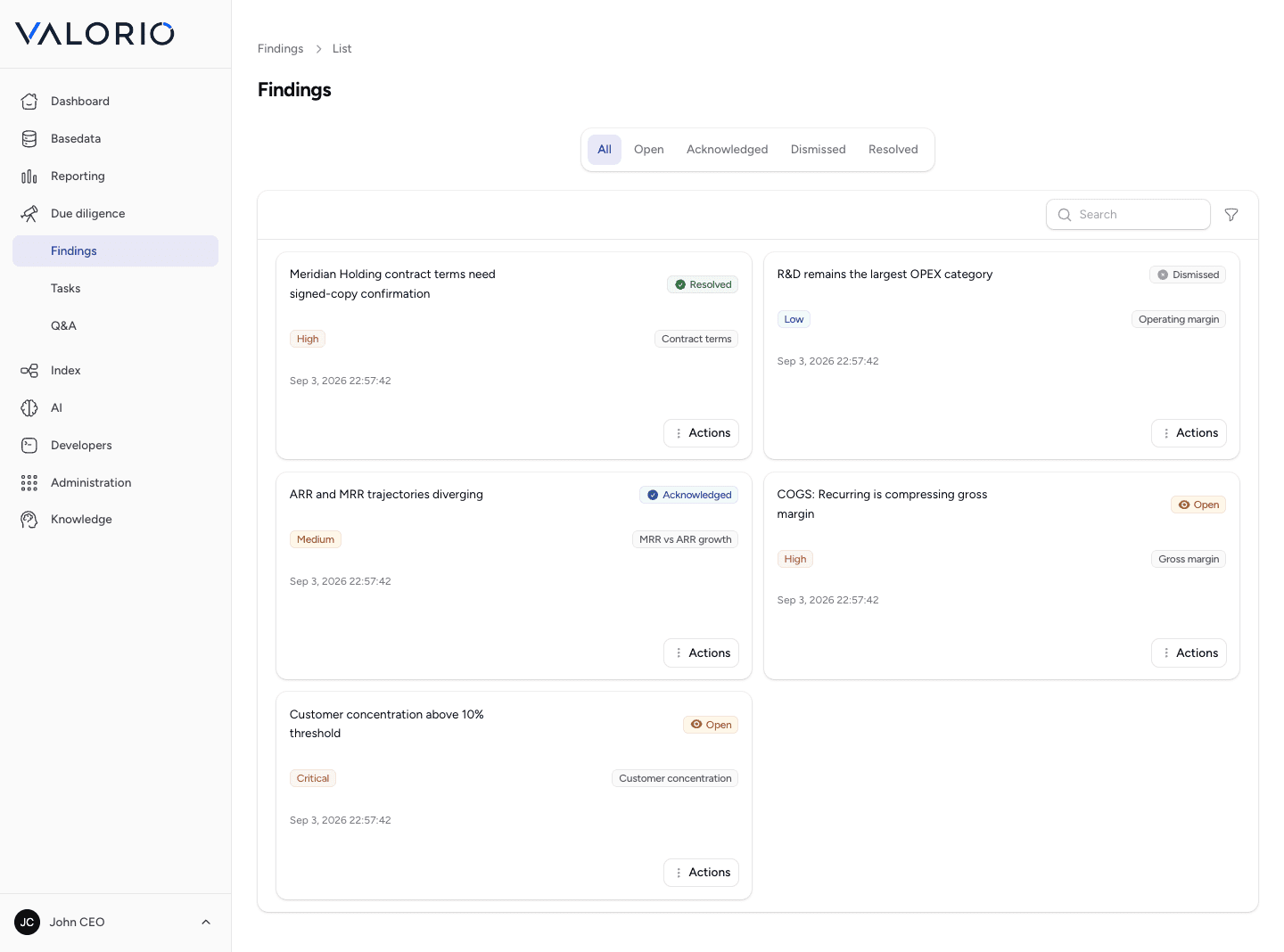
Findings
A finding is a single AI-detected issue on a report — carrying a severity, a confidence level, and an evidence table with row-level provenance back to the source data, so a reviewer never has to take the AI's word for it. Findings move through a simple lifecycle: Open, Acknowledged, Dismissed, or Resolved.
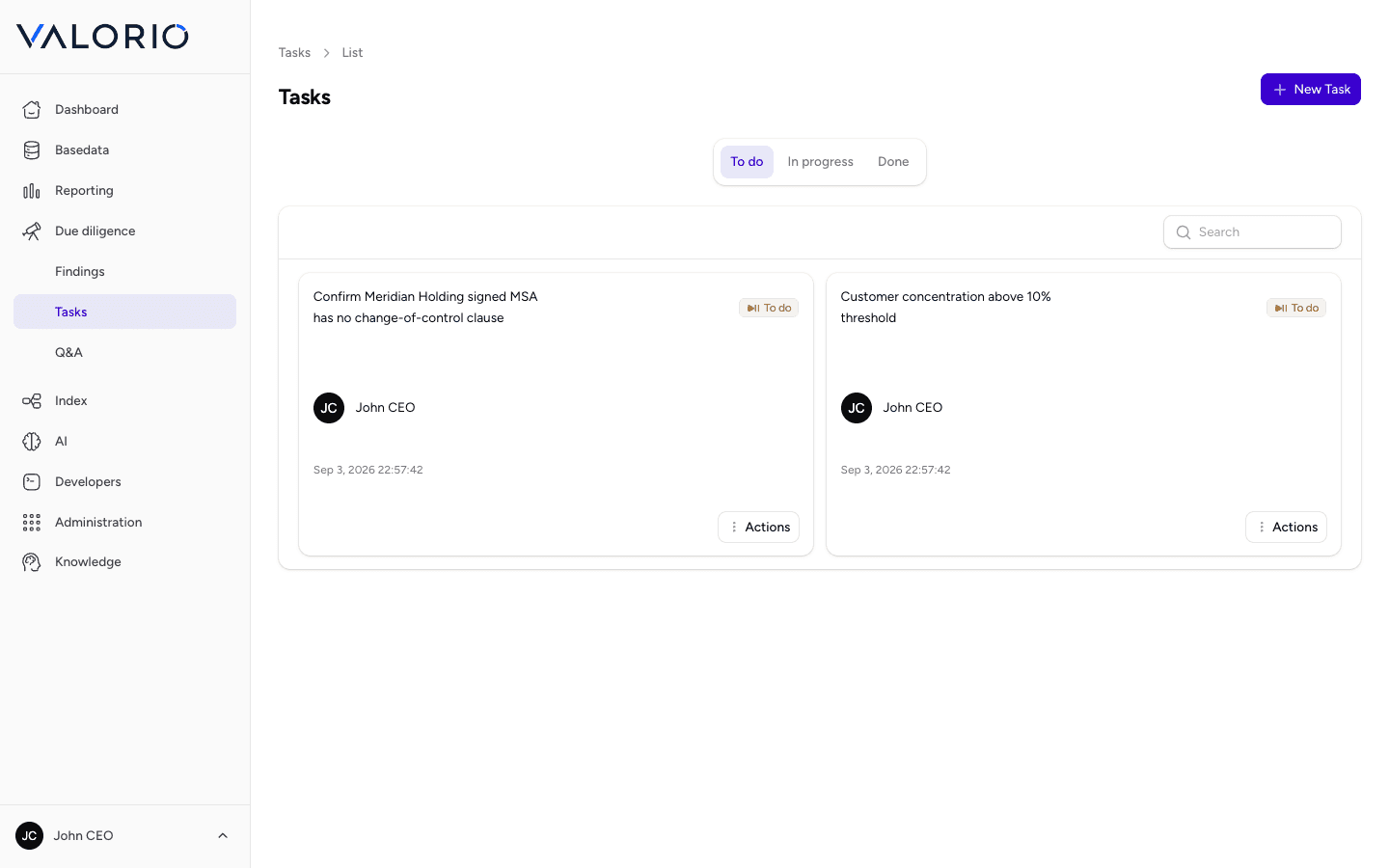
Tasks
A task is trackable follow-up work — often generated from a finding that needs a human to act on it, but usable for any piece of diligence work. Each task can be assigned to a team member, has a status, and tracks when it started, when it's due, and when it finished, so nothing that needs a human decision gets lost in a findings list.
Q&A: single-agent and swarm drafting
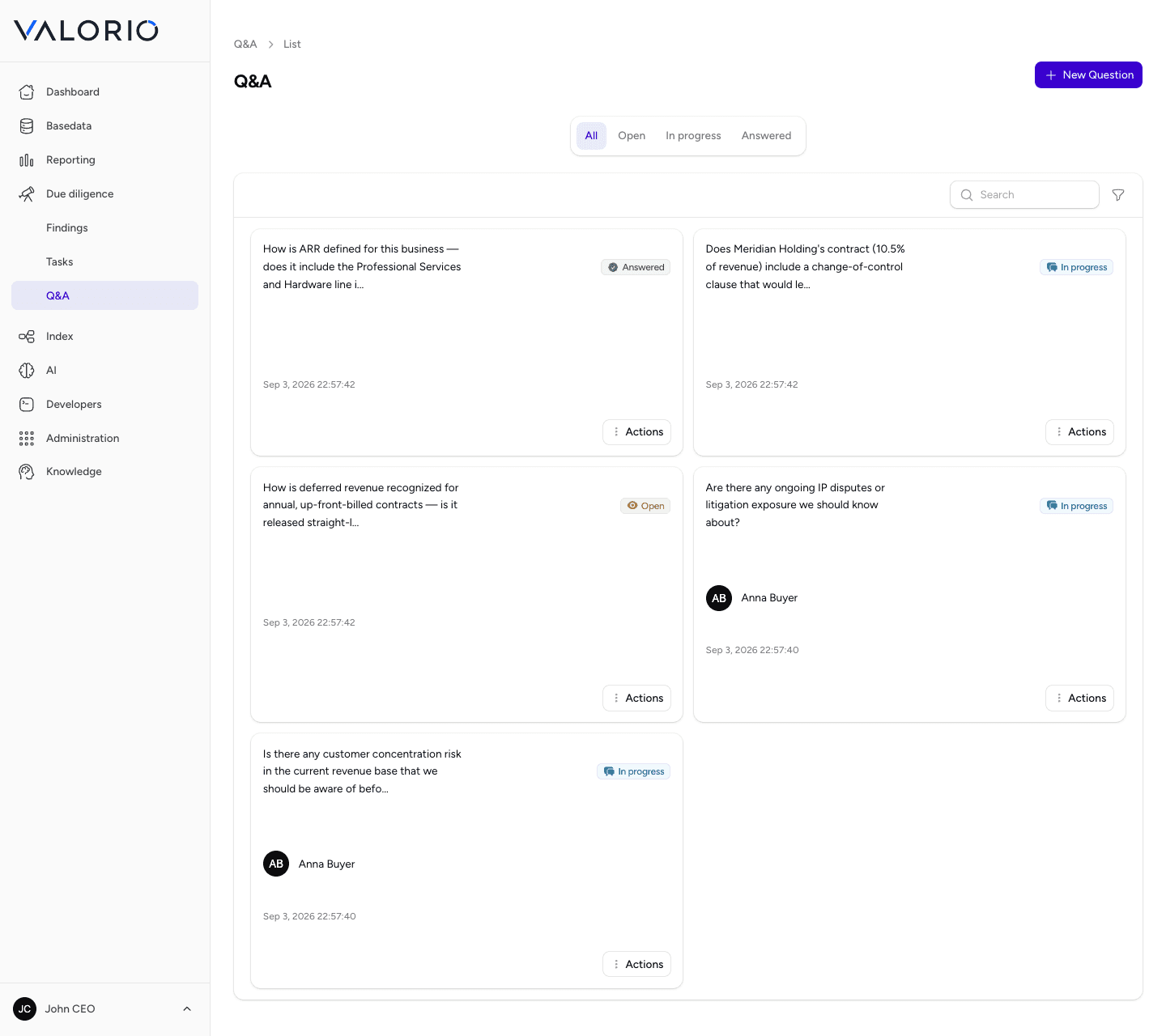
The Q&A queue is where buyer due-diligence questions live. For each one, a seller can assign a single specialized AI agent — CFO, CLO, CTO, or another persona suited to the question — to draft an answer alone, or run more than one agent in swarm mode.
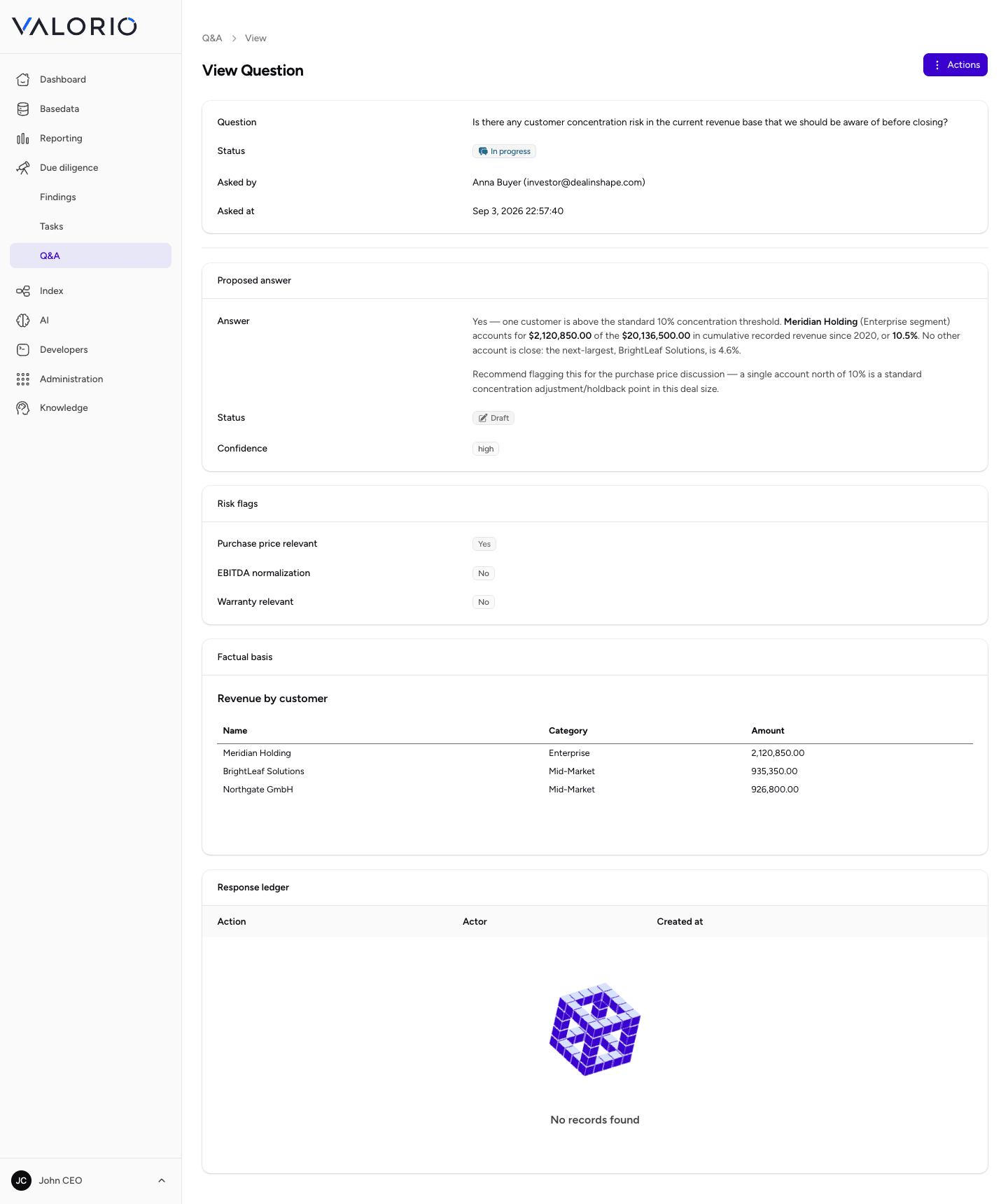
In single-agent mode, one agent drafts an answer, pulling directly from the workspace's documents and data, and flags the risks it sees. The evidence backing every claim in the draft is shown alongside it, so a seller reviewing the answer can verify it before sending — nothing gets sent to a buyer unreviewed.
In swarm mode, multiple agents draft independently — for example the CFO and CLO agents, or all three including the CTO agent, answering the same question each from their own domain. A conflict-check agent then compares every draft against the others. If they agree, the seller just reviews and sends. If they disagree, VALORIO surfaces it as a detected conflict, explains what's inconsistent between the drafts, and an M&A Advisor agent recommends which draft is better supported — all before a human ever has to reconcile the disagreement by hand.
This is the swarm-conflict flow in practice: a CFO draft says no litigation is outstanding based on the accrued-liabilities ledger; a CLO draft, independently, surfaces an active trademark opposition the ledger doesn't yet reflect. The conflict check flags this automatically, and the M&A Advisor recommends trusting the CLO draft — with its reasoning shown, not just its conclusion — since the case record is directly responsive to the question and verifiable, while the financial draft only reflects balance-sheet treatment that may lag an unresolved dispute.
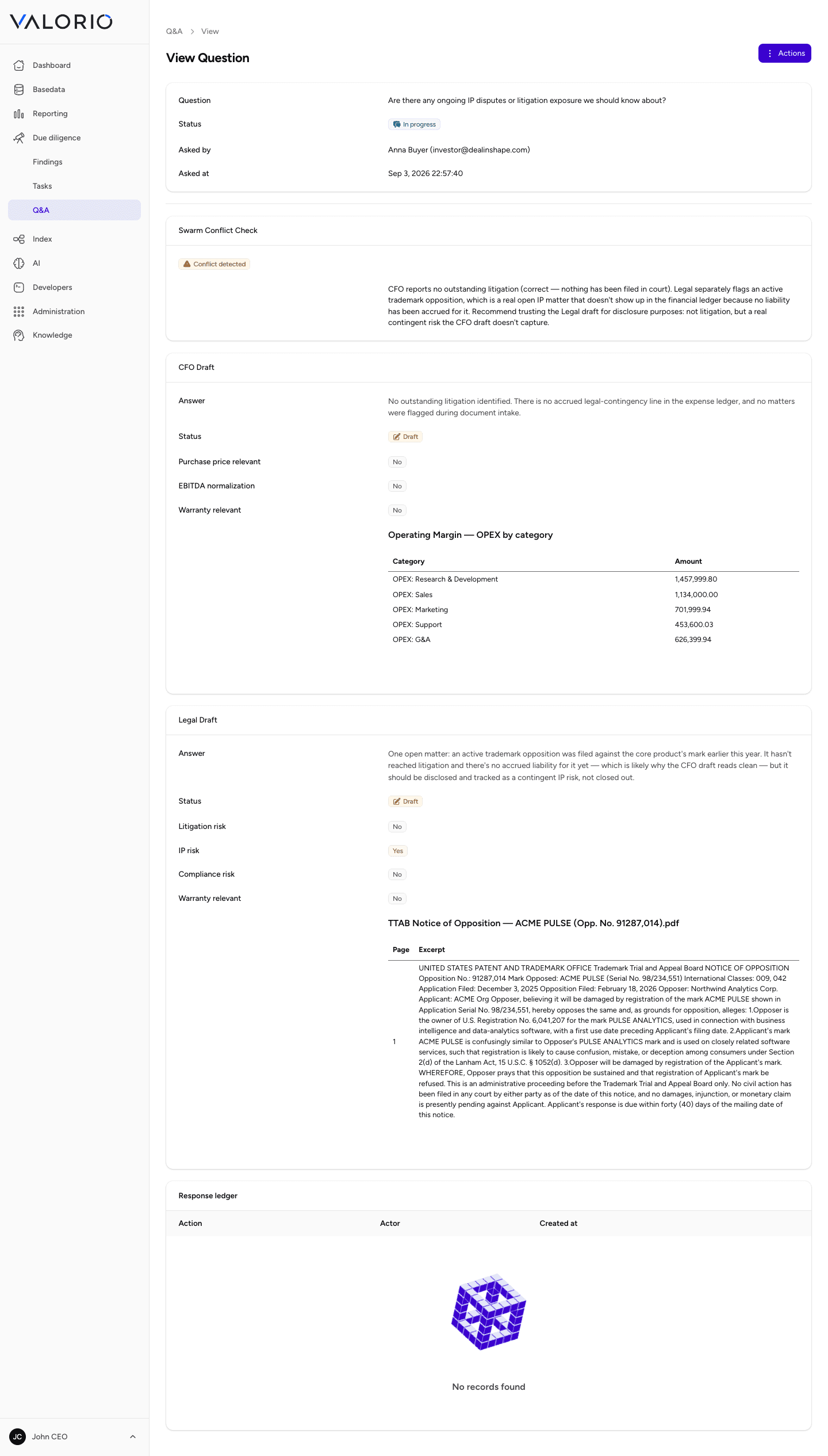
Swarm mode is most valuable on exactly the questions where a single answer risks being one-sided — legal exposure, contingent liabilities, anything where financial, legal, and technical readings of the same fact can differ.