
For investors & buyers
Evaluate a trajectory, not just a snapshot
A target running VALORIO doesn't hand you a static valuation deck — it hands you a live Enterprise Value figure and a graded backlog of the specific things being done to grow it, with the evidence behind every one.
A number in a teaser tells you where a company says it stands today. It doesn't tell you how much of that is durable, how much is aspirational, or what's actually being done about the gap. VALORIO gives you both sides at once: the seller's Enterprise Value Engine, showing exactly how their number is computed and what's still on the table, and a diligence queue where you can verify any of it directly, with evidence attached.
See the number, and everything behind it
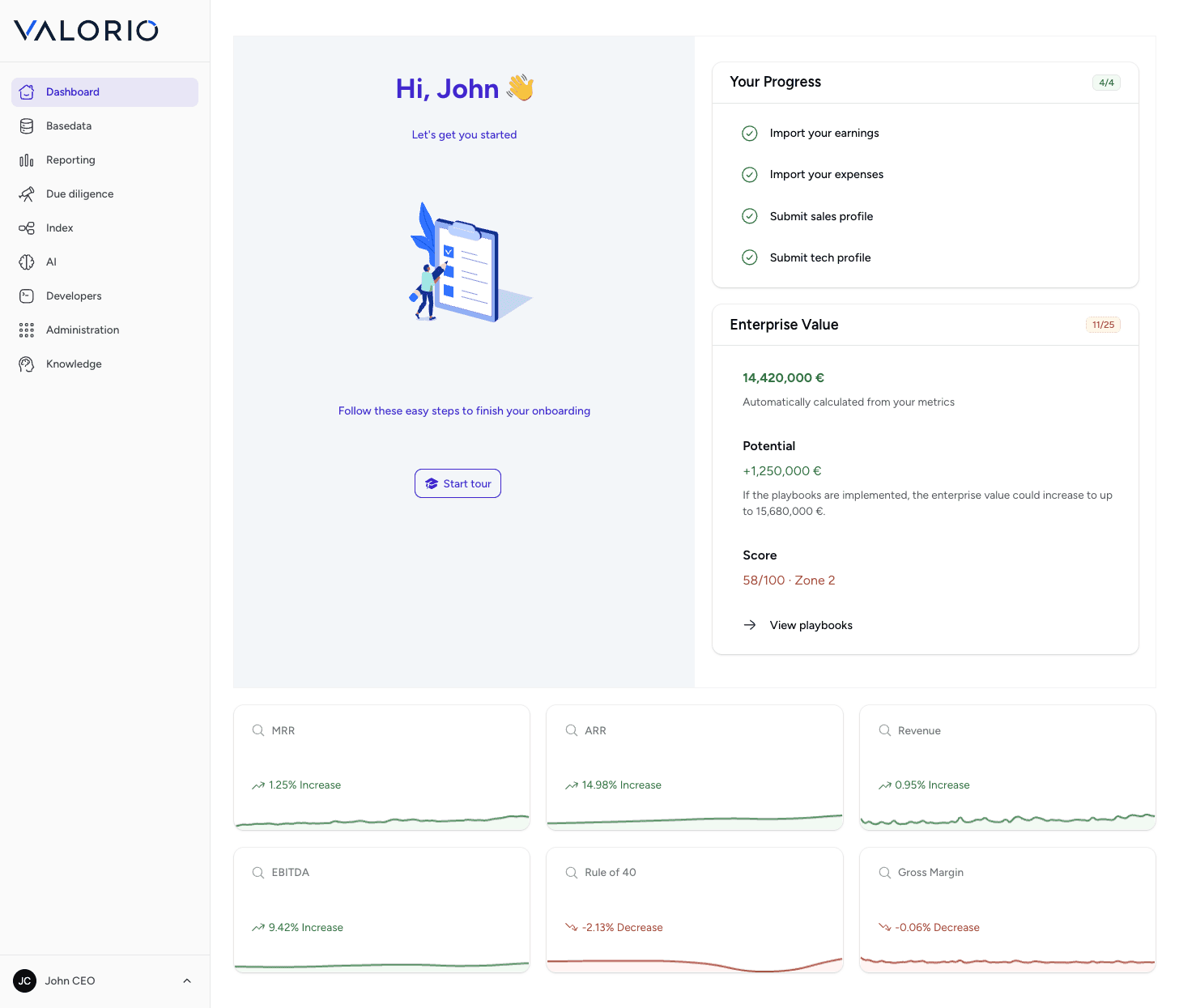
Enterprise Value is computed live from the target's Qualified ARR and a multiple derived from a 100-point Valuation Score of their own metrics — not typed into a deck once and left to go stale. Next to it sits Potential: the additional value their still-open playbooks could add if implemented, computed against the same score and multiple and deliberately capped — no dimension can gain more than it has left, or more than a third of its maximum, and the total never exceeds 8 score points — so you can see a realistic ceiling and how they got there.
A graded backlog, not a claim on a slide
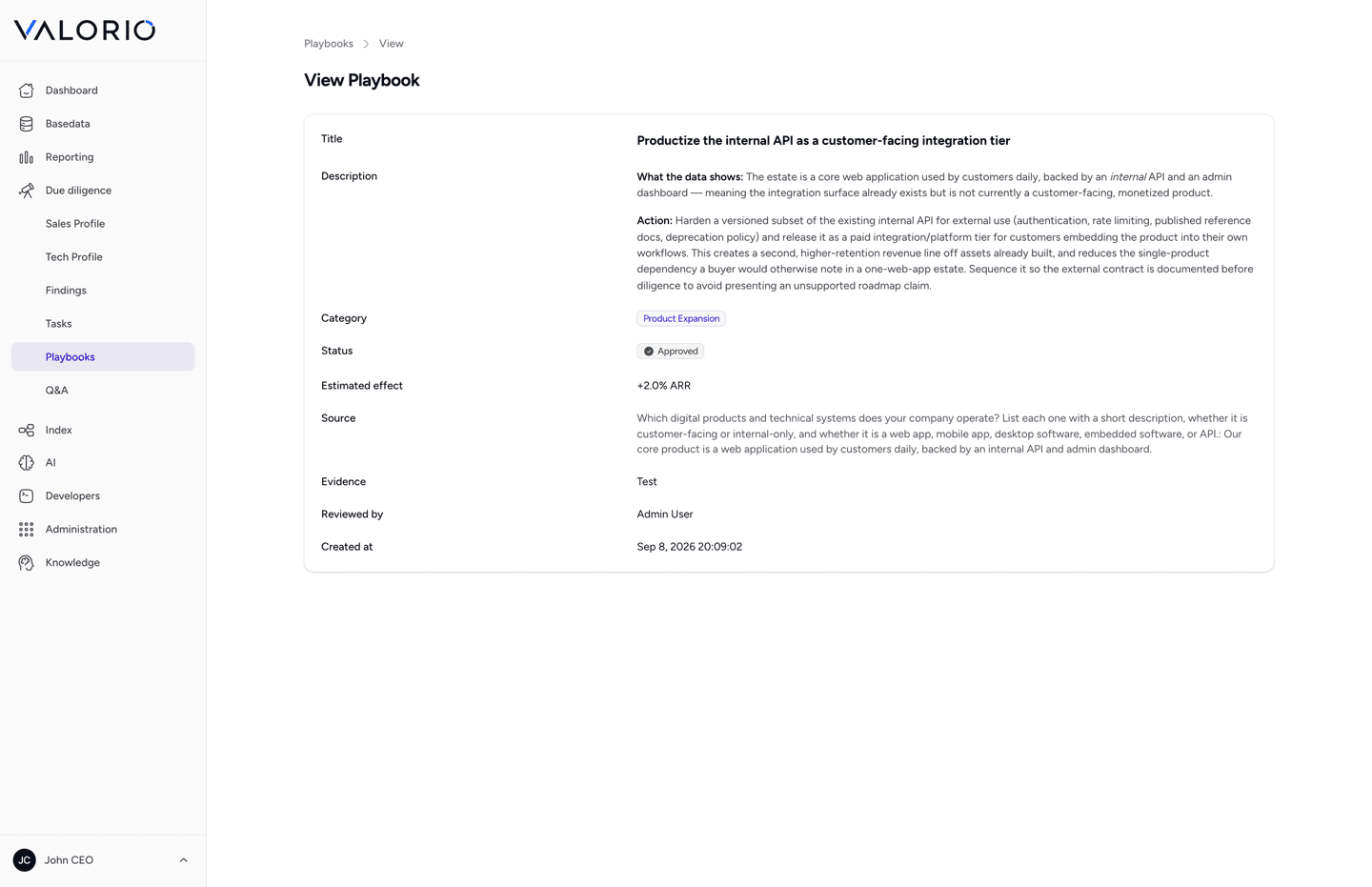
Every value-creation playbook is created from one specific finding, carries that finding's evidence trail, states its estimated effect in points on one Valuation Score dimension, and carries a status: Open, Self-reported once someone claims the work is done, or Approved once a reviewer has checked that claim against its evidence. Only Approved playbooks have already moved out of Potential and into the reported number — everything else is still a claim, not a fact, and you can see exactly which is which.
That distinction is the difference between a company that's actually executing its value-creation plan and one that's listing intentions. You get to weight your own model accordingly, deal by deal.
Verify any of it directly, in minutes instead of weeks
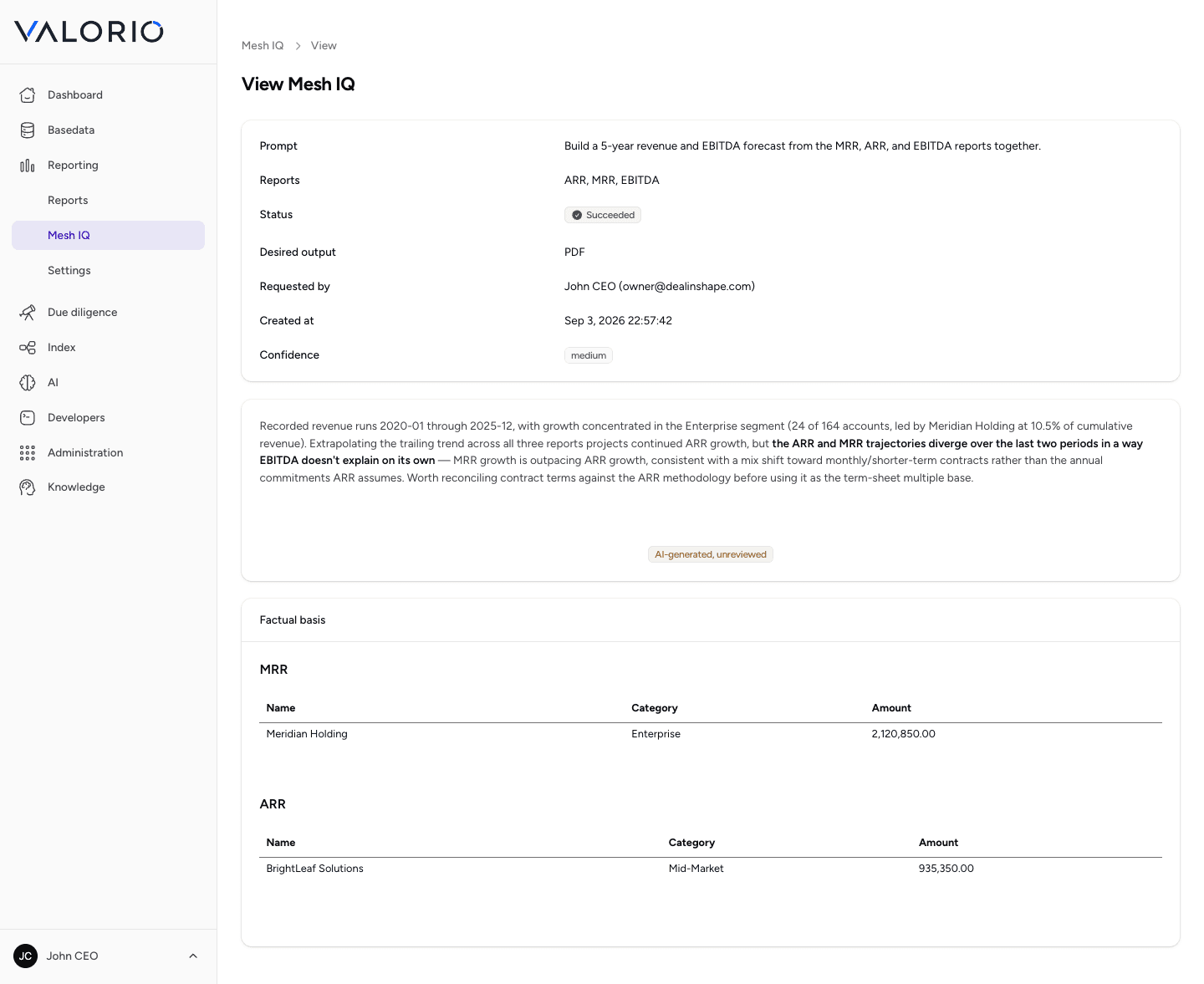
Every question you ask lands in a queue you can track yourself, with answers carrying an evidence table citing the specific rows in the specific report they're drawn from. Anything that doesn't fit a single report — "does the customer concentration change if I exclude the two largest accounts" — goes to Mesh IQ, which reasons across several of the target's reports at once and answers in plain language, flagging it if two reports quietly disagree with each other.
Bring your own AI agent
If your own team already works through an AI assistant, VALORIO doesn't ask you to abandon it. Every workspace exposes its own dedicated MCP server — covering earnings, expenses, and reporting, as well as the data room and Q&A — so any MCP-compatible agent your side runs can query the target's Enterprise Value, playbooks, numbers, and documents directly instead of you relaying questions back and forth by hand.
Enterprise Value and Potential are the seller's own indicative estimates, not a certified valuation — treat them, like Mesh IQ answers, as a fast, well-cited read to verify against the underlying evidence, not a substitute for your own diligence.
On the other side of the deal?
Know what the company is worth — and what would make it worth more